
Decoding The
Language Of Land,
Decisively
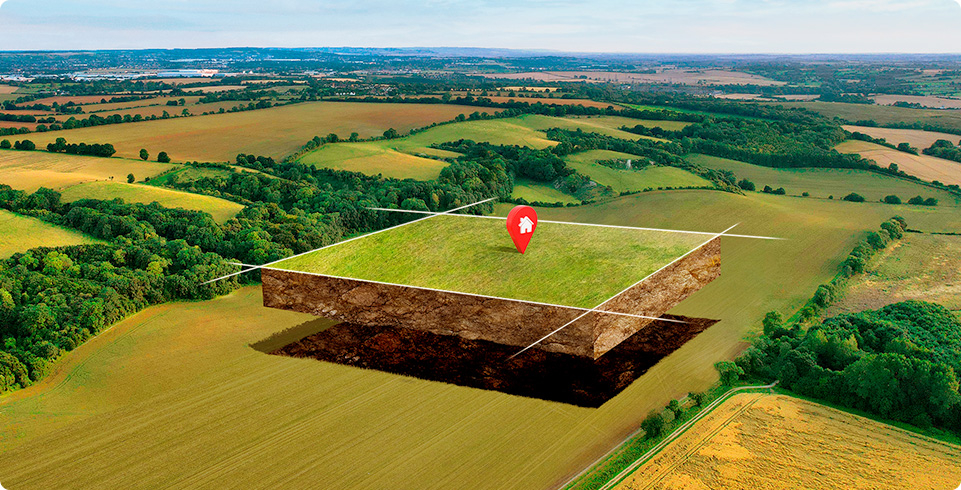
Unearthing Wealth From The
Earth’s Most Precious Asset
At Lords of the Lands, our vision is to empower new-age investors, corporates, and end-users to build enduring wealth by strategically harnessing the finite and appreciating power of land. Through innovative planning and development, we transform underutilized land into high-value, ready assets — where legacy meets ingenuity and capital finds clarity.
The name Lords of the Lands reflects a timeless truth: land has always been the bedrock of power, prosperity, and legacy. Reviving this ethos, we act as modern-day custodians—guiding investors to become the new “lords” through astute, strategic investment in plotted development. By identifying, acquiring, and transforming raw land into meticulously planned, ready-to-build plots, we offer the ultimate canvas for wealth creation and legacy building.
Land - The Most Precious
Investment One Can Make
Land, a truly finite resource, constitutes a mere 30% of our earth’s total surface, with a significant portion of that being uninhabitable or undevelopable. This inherent scarcity makes it arguably the most precious investment one can make.

Here Are Some Reasons
Finite Supply
Unlike stocks, bonds, diamonds or even precious metals, land cannot be manufactured or expanded. Its limited availability consistently drives long-term value upward, often outperforming other investments.
Hedge Against Inflation
While markets fluctuate, the demand for a fixed asset like land remains steady. This ensures continuous appreciation, making land a reliable safeguard and a pillar of generational wealth.
Tangible & Versatile
Land is real, usable, and adaptable for development, agriculture, or simply holding. This tangible utility makes it an unmatched long-term investment with enduring returns

An Investment In Land, See Where It Can Land You
|
Asset Class
|
CAGR%
|
ROLE
|
|---|---|---|
|
Land
|
16-22%
|
Long-Term Wealth Creator
|
|
Gold
|
11-12%
|
A Good Hedge And Steady Growth
|
|
Fixed Deposit
|
6-7%
|
Safe & Secured. But Barely Beats Inflation.
|
|
Equity (NIFTY 50)
|
15-16%
|
Volatile & Risky
|
Analysing historical data for India over a 10-year period (roughly 2014-2024) reveals interesting trends across different asset classes. It’s important to note that real estate (and by extension, land) returns are highly location-specific and can vary wildly. General averages for land and real estate are harder to pin down precisely than for standardized assets like gold, stocks, or bank deposits.
A general overview of performance based on available data, keeping in mind that these are approximate. Actual returns for individual investors may differ.
Why Branded Land is different?
|
INVESTMENT TYPE
|
RISK
|
REWARD
|
|---|---|---|
|
Branded Land
|
Low
|
High
|
|
Fixed Deposits
|
Low
|
Low
|
|
Gold
|
Medium
|
Medium
|
|
Equity/Stocks
|
High
|
High
|
Preferred By New Age Investors:
The Rise Of The New Indian
Wealth Custodians

In contemporary India, the term “landlord” has evolved to include a new generation of investors — from Gen Z to Millennials — who are increasingly turning to plotted development over traditional investments.
These modern landlords seek long-term capital appreciation, future personal use, or rental income through developed properties. Their motivations are anchored in financial security, wealth creation, and the enduring value of land as a tangible, appreciating asset.
30% Of Earth Is Land;
India Has Only 0.64%
Developing Land On Earth – More Of A Scarcity
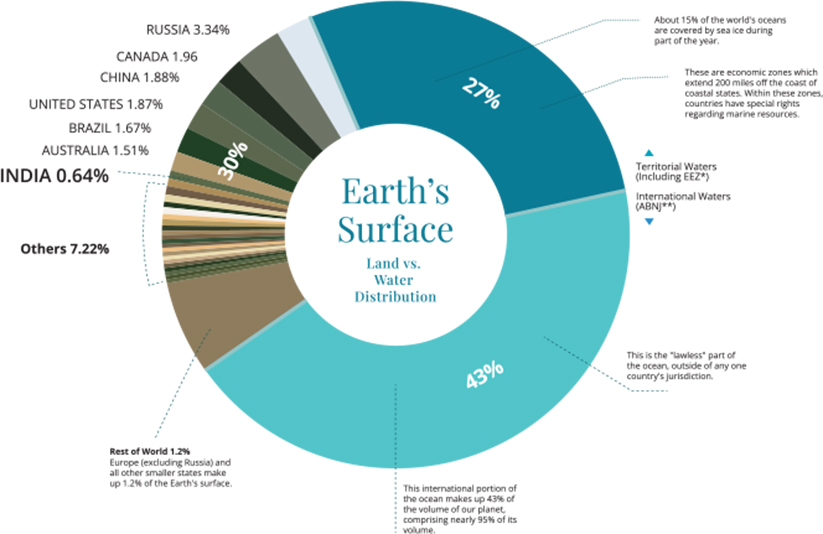
Land, a truly finite resource, constitutes a mere 30% of our planet’s total surface, with a significant portion of that being uninhabitable or undevelopable. This inherent scarcity makes it arguably the most precious investment one can make.
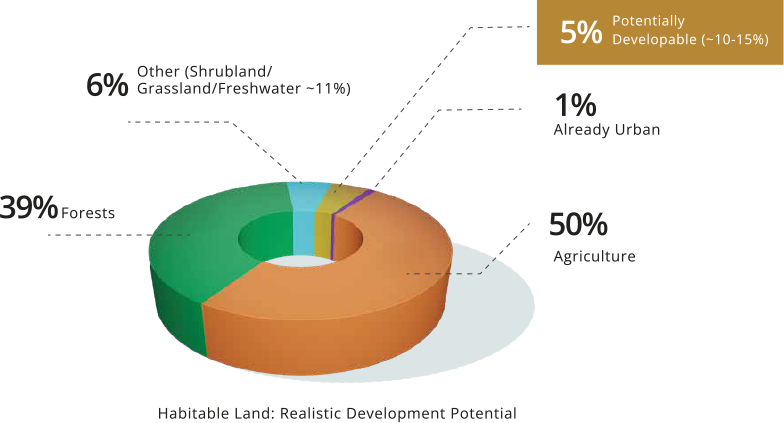
Out Of 30% Of The Earth’s Surface,
Only 52% Is Habitable

Out Of This 52%...
0%
50%
AGRICULTURE
0%
39%
forest
0%
11%
other land
0%
1%
Urban
Which also means that only 0.15% of earth’s surface is urban land.
Collectively, Futuristic Development Potential:
~0.78% Of Earth’s Surface
WORLD
Global Land Investment
A Wider Horizon For Wealth
Land is the one asset that speaks a universal language — value. And the world today is opening its borders to smart, secure land ownership like never before.
From emerging economies to developed markets, global land assets are offering investors unmatched stability, long-term appreciation, and protection against market volatility.
International Appreciation Trends
A Rising Curve You Can Count On
Across continents, land values continue to surge — driven by urban expansion, infrastructure growth, and the global shift toward asset-backed security.
Comparison Of World’s Largest Cities
By 2035, The World’s Fastest Growing Cities Will Be In India
The Future Cities Of Progression
6 Indian Cities In Asia’s Top 10 List
Mumbai
Delhi
Kolkata
Chennai
Bangalore
Hyderabad
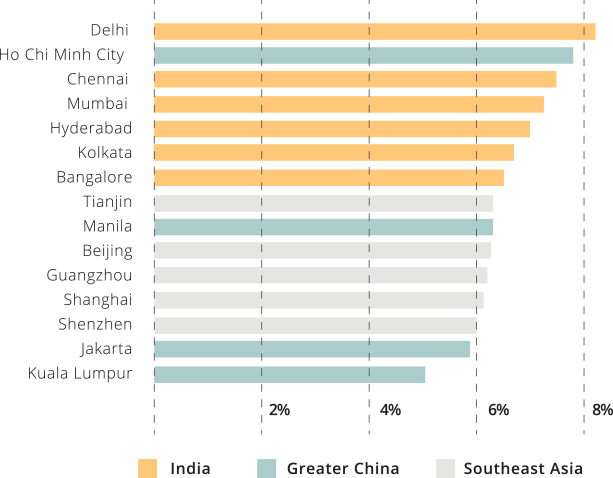
By 2035,
The 10 Fastest-Developing Cities On Earth
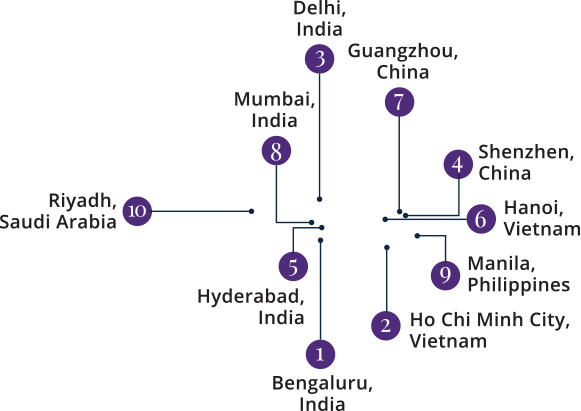
Based on the economy’s future strength, the population’s future dependency ratio and the growth of personal wealth, the economy and population migration
Source: Savills Resilient Cities Index
By 2050,

India’s GDP is projected to reach around
$30 trillion,
making it the world’s second-largest economy after China.

Maharashtra is expected to achieve a
$1 trillion GDP
by 2030, driven by industrialization and fiscal prudence.
WHY INDIA?
India: Paucity In The Availability Of Potential
Since the 1500s, Indian cities have featured among the world’s top economic and cultural hubs. Urban population in Europe shot up in the 1800s and 1900s after the industrial revolution,
but since then Asian cities have emerged as the largest population centres.
India’s Land Scarcity & Urban Expansion
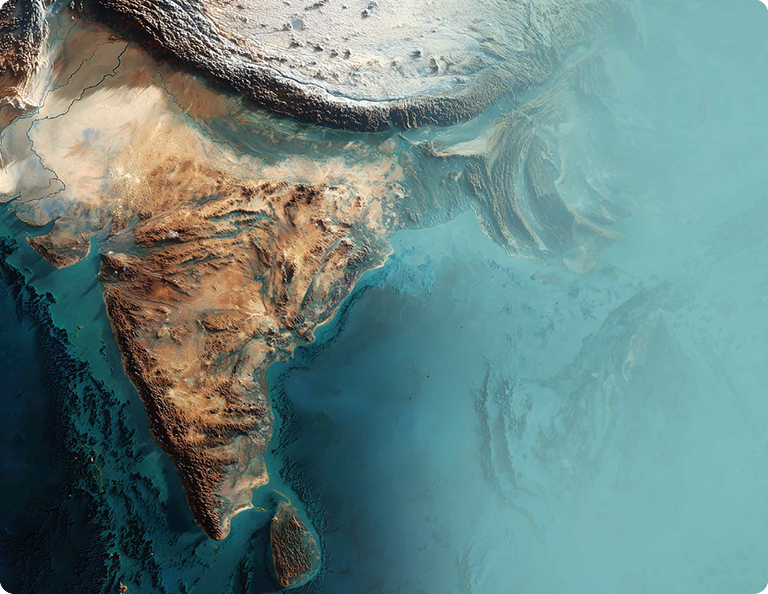
What remains as “land potential” for development is ~15% of “residual” land that is neither intensively cultivated, nor under dense forest, nor permanently uninhabitable.
Current Land Use
Approximate, Based
On Govt./FAO/ISFR Data
0%

Agriculture
(net sown area + fallow + grazing)
0%

Forests + Tree Cover
0%

Land Not Available For Cultivation
(barren, built-up, deserts, mountains, etc.)
0%
Miscellaneous
(Shrubland, Wasteland, Other Uncategorized)
Realistic Potential (Moderate Assumptions)
- 10–15% of India’s area (which is just 0.01% of the world area) is “potentially open” land.
- Out of this, only ~3% of India’s total land (which is just 0.002% of the world area) could realistically be developed further without major conflict with food, forest, or ecology.
|
LAND SHARE
|
WHAT IT TELLS US
|
EXAMPLE STATES WITH HIGH/LOW VALUES
|
|---|---|---|
|
Forest cover
|
States with large % of land in forest have less potential
|
Arunachal Pradesh ~90+ %, northeastern states have very high; Punjab, Rajasthan low forest cover. (NER DATABANK)
|
|
Not available for cultivation / permanent pastures / grazing / wastelands / barren & unculturable land
|
These are lands that might be partly developable if not protected or ecologically sensitive
|
Gujarat, Rajasthan, Madhya Pradesh feature prominently in reports of high wasteland / barren lands. (india-seminar.com)
|
|
Agricultural land share
|
States with a very high % of land under agriculture will have less “leftover” land
|
Many in the Indo-Gangetic plains (UP, Bihar, Punjab) have high agricultural area. (NER DATABANK)
|
Where are India’s
Biggest Cities?
Maharashtra being the second best in the list with most number of million-plus mega cities.
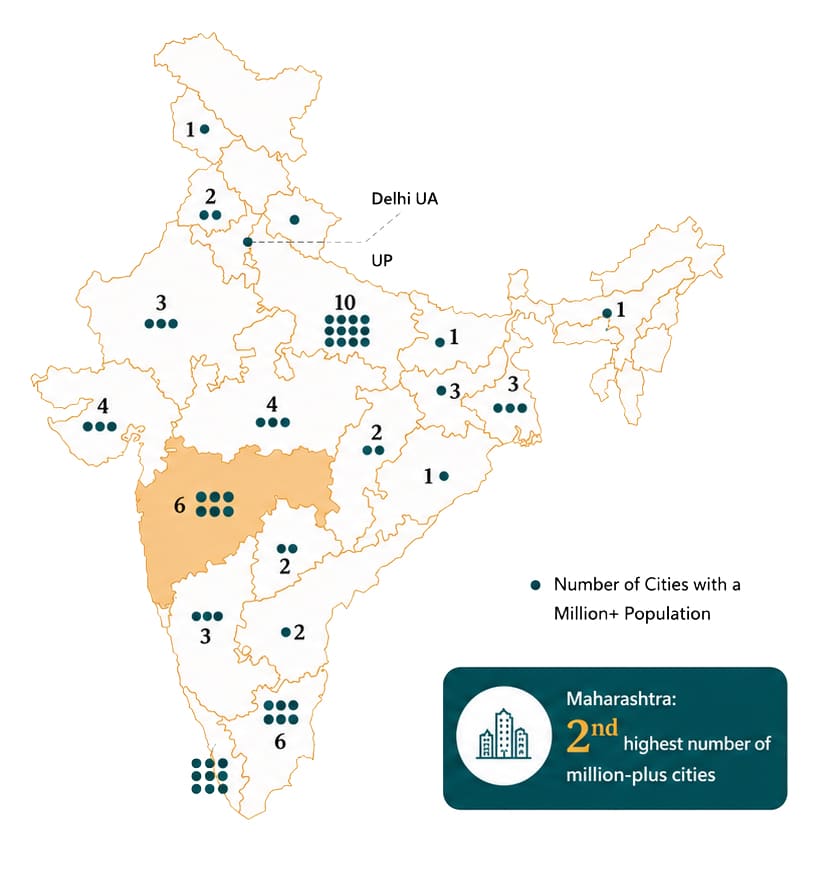

By 2050, India would need to accommodate an additional 335 million people in urban centres. The existing cities are breaking under the weight of their current residents and hence there is a need for expansion of existing urban areas along with development of new cities and towns.

According to a UN report, India's most populous cities are Delhi (31.1 Mn), Mumbai (20.6 Mn), Kolkata (15 Mn), Bangalore (12.7 Mn), Chennai (11.2 Mn).

They cannot accommodate any further. Hence, the need to build new cities or upgrade not-so-overloaded cities/towns, which can become new destination points for rural-urban migration.
Most Promising States For Land Development
The year 2024 marked a watershed year in India’s real estate sector, characterized by a surge in land acquisitions. Developers across the country embarked on an ambitious expansion drive, securing a vast 2,335 acres of land through 134 distinct transactions in 23 major urban centers. These strategic land acquisitions, valued at a staggering INR 39,742 crore, laid the foundation for potential development of 194 million sq. ft. of real estate.

0
Acres
Land acquired

0
Transactions
Across 23 major urban centers

₹
0
Crore
Total land acquisition value (INR)

0
Million sq. ft.
Potential real estate development
Maharashtra,
The State Of Good Hope
Maharashtra is India’s second most industrialised state contributing 20% of national industrial output.
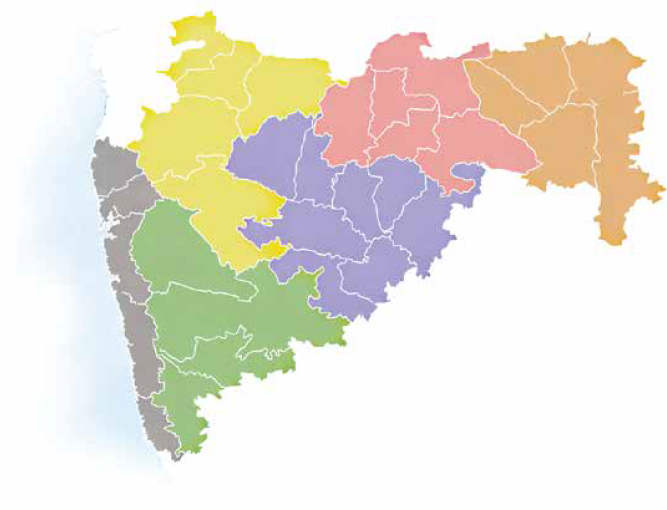

“Viksit Maharashtra” vision aims to transform the state into a $5 trillion economy by 2047 and position it as a global leader in various sectors.

The 7 districts that account for most of the economic activities and contribute 54% to the GSDP are Raigad, Nagpur, Pune, Thane, Palghar, Mumbai City and Mumbai Suburban.
Frequently Asked Questions
Why should I invest in land instead of buying a flat or apartment?
Investing in land offers several long-term advantages over buying a flat or apartment. Unlike buildings, land does not depreciate with age and requires virtually no maintenance. It also offers lower entry costs, flexible usage—you can build whenever you’re ready—and stronger long-term appreciation potential. Between 2014 and 2024, land in the Mumbai Metropolitan Region (MMR) delivered an estimated 16–22% CAGR, outperforming gold (11–12%), Fixed Deposits (5–6%), and the NIFTY 50 (15–16%). For investors focused on capital appreciation, land remains one of India’s strongest wealth-creation assets.
Is land a safe long-term investment in India?
Yes. Land is widely considered one of the safest long-term investments in India because it is a finite, non-reproducible resource. While 70% of Earth is covered by water, only 30% is land, and India accounts for just 0.64% of the world’s landmass. The amount of truly developable land is even more limited. Combined with rising population, rapid urbanisation and infrastructure growth, this scarcity has historically supported long-term land value appreciation. In Mumbai, land prices have grown from around ₹4 per sq. ft. in 1940 to nearly ₹22,000 per sq. ft. in 2024, making land a strong hedge against inflation.
Why is plotted development better than buying a constructed home?
Plotted developments combine affordability with flexibility. They typically require a lower initial investment than a constructed home and allow you to build according to your own budget, design and timeline. Unlike apartments, plots have no structural depreciation, no mandatory maintenance charges and greater freedom to sell, hold or develop whenever you choose. Because land generally appreciates faster than built structures, plotted developments are increasingly preferred by first-time buyers, millennials and Gen Z investors seeking long-term wealth creation.
What is the historical price appreciation of land in Mumbai and MMR?
Mumbai’s land market has demonstrated remarkable long-term appreciation over several decades. Average land values have grown from approximately ₹4 per sq. ft. in 1940 to ₹40 in 1960, ₹700 in 1980, ₹2,500 in 2000, ₹7,000 in 2010, ₹15,000 in 2020 and nearly ₹22,000 in 2024. This represents an estimated 5,500-fold increase over 84 years. While market cycles have influenced transaction activity, land values across the Mumbai Metropolitan Region have consistently shown strong long-term growth, reinforcing land as one of India’s most resilient investment assets.
How much return can I expect from investing in plotted land in MMR?
Returns from plotted land depend on location, infrastructure development and your investment horizon. Across the Mumbai Metropolitan Region, many experts expect well-located land parcels to deliver 3X to 5X appreciation over the next decade. Emerging micro-markets such as Khopoli have projected growth potential of nearly 3.9X between 2020 and 2030. Locations around the Navi Mumbai International Airport, including Panvel and Ulwe, have recorded annual price growth of 10–24%, while Alibaug has witnessed land and villa plot appreciation of 40–100% in just three years.
Why is land in Indian cities so expensive compared to other countries?
Land in Indian cities commands a premium because demand far exceeds supply. India is home to over 1.4 billion people but occupies only about 0.64% of the world’s landmass. A significant portion of this land is covered by forests, agriculture, mountains or other non-developable terrain, leaving very limited urban land for development. Rapid urbanisation, rising incomes, infrastructure expansion and population growth continue to intensify demand, making land in major cities such as Mumbai one of the country’s most valuable assets.
How many of the world's fastest-growing cities will be in India by 2035?
India is expected to be home to several of the world’s fastest-growing cities by 2035. According to the Savills Growth Hubs Index, four Indian cities feature among the world’s top ten growth hubs: Bengaluru (#1), Delhi (#3), Hyderabad (#5) and Mumbai (#8). Strong GDP growth, expanding infrastructure, increasing urbanisation and rising investment continue to position Indian cities among the most attractive destinations for long-term real estate and land investment.