

Building a Weekend House on an NA Plot: The Steps
- On an NA plot you may build a residential house — but only after development permission (a commencement certificate) is granted by the planning authority. Starting without it is unauthorised development.
- The core application needs a recent 7/12 extract or property card not older than six months, a measurement plan, an area statement from a licensed technical person, and architect-drawn plans (UDCPR 2020).
- The authority must grant or refuse within 60 days of a complete (re)submission. If it stays silent for 60 days, the UDCPR provides for deemed permission — within the strict conditions set out in the regulations.
- A commencement certificate is valid for 4 years in aggregate, renewed yearly; after that you reapply.
- At the end, you need an occupancy certificate before the house is legally fit to occupy. “NA” is the start of the build process, not the finish line.
Buying an NA plot is the easy part. The question that follows — “so can I just start building?” — has a clear answer under Maharashtra’s building regulations, and it begins with a permission most weekend-home buyers underestimate.
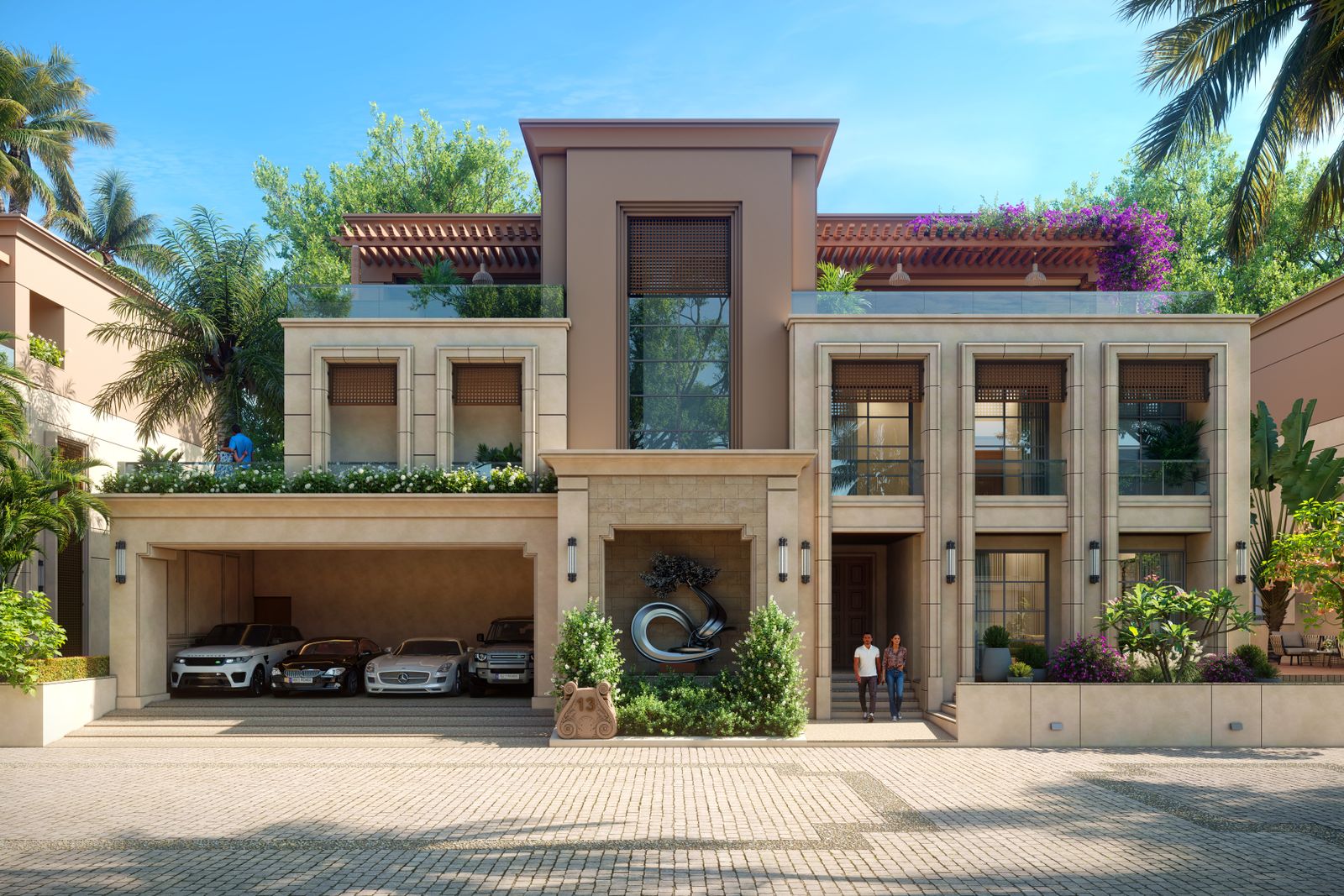
Can you start building on an NA plot straight away?
No. Even on a fully non-agricultural plot, you must obtain development permission — a commencement certificate — from the planning authority before any construction begins. Building first and regularising later is treated as unauthorised development.
NA status means the land use has been converted; it does not mean a building is approved. The commencement certificate is the authority’s sanction of your specific plans on your specific plot, and it is the document that makes the build legal. For a weekend home this is not a formality to outsource and forget — it sets your sanctioned FSI, margins and height, and it is what a future buyer, a bank, or an occupancy inspection will ask to see.
What documents do you need to apply?
The application for development permission must be accompanied by proof of ownership and area — principally a 7/12 extract or property card dated within the last six months, a measurement plan from the Land Records department, an area statement from a licensed technical person, and the building plans prepared by a licensed architect.
Under the UDCPR 2020, the ownership and area documents specifically include a latest 7/12 extract or property register card “not earlier than six months” before submission, the original measurement plan or city survey sheet, and a statement of the holding’s area by a qualified licensed technical person or architect with an affidavit. On top of these go the architectural drawings, the site plan, and any layout approval, NOC or sub-division sanction that applies. Most of the process is now online.
| Stage | What happens | Timeline (UDCPR) |
|---|---|---|
| Application | Submit ownership/area documents + architect plans, pay fees | — |
| Scrutiny | Authority raises objections; you comply and resubmit | — |
| Decision | Grant or refuse the commencement certificate | Within 60 days of complete (re)submission |
| Deemed permission | If no response in 60 days, deemed sanctioned (strict conditions) | After 60 days |
| Validity | Commencement certificate valid, renewed yearly | 4 years in aggregate |
| Completion | Occupancy certificate before the house is occupied | On completion |
How long does the permission take?
The authority is required to grant or refuse the commencement certificate within 60 days of a complete submission or resubmission. If it fails to respond within that window, the UDCPR provides for the proposal to be treated as deemed permission — but only where the proposal strictly conforms to the regulations and the plan.
Deemed permission is a safeguard against official delay, not a shortcut around compliance: any development carried out under a deemed permission that actually breaches the regulations is still unauthorised. In practice, most of the elapsed time is spent on the scrutiny-and-compliance loop — the authority points out objections, your architect modifies the plans, and the 60-day clock runs from the clean resubmission. Build the timeline into your planning rather than assuming an instant sanction.
What are the steps, in order?
Confirm the plot is genuinely NA and title-clear, appoint a licensed architect, assemble the documents, apply for development permission, clear scrutiny, receive the commencement certificate, build within its validity, and finally obtain the occupancy certificate.
- 1Verify NA status and title. Confirm the plot is NA and the 7/12 / property card is clean before spending on design.
- 2Appoint a licensed architect / engineer. They prepare the plans and the area statement the authority requires.
- 3Assemble documents. 7/12 or property card (within 6 months), measurement plan, area statement with affidavit, layout/NOCs as applicable.
- 4Apply for development permission (commencement certificate), online, with fees.
- 5Clear scrutiny. Comply with objections and resubmit; the 60-day decision clock runs from the clean resubmission.
- 6Receive the commencement certificate and begin work; it is valid 4 years in aggregate, renewed yearly.
- 7Obtain the occupancy certificate on completion before occupying the house.
What does the commencement certificate actually control?
It sanctions your building against the plot’s permitted FSI, setbacks, margins and height. It is the legal envelope for your house — build outside it and the construction is unauthorised, even on an NA plot you own outright.
This is why the architect’s role matters: the plans you submit define what you can lawfully build, and the sanction ties you to them. Changes during construction generally need revised permission. Keeping the build within the sanctioned plans is also what protects resale value — a future buyer’s lawyer and lender will check the commencement certificate and occupancy certificate against what is actually standing on the plot.
What if the plot is not actually NA yet?
Then conversion comes first. Since 31 December 2025, where the intended use is already permitted under the Development or Regional Plan, Maharashtra routes conversion through the development-permission process itself with a one-time premium of 0.1%–0.5% of ready-reckoner value, instead of a separate Sanad.
That reform streamlines the paperwork, but a plot that is still agricultural is not a plot you can build a weekend house on today — and if it is agricultural, the Section 63 agriculturist rule governed who could buy it in the first place. If a seller is marketing a “ready-to-build” plot, confirm the NA status in writing before you plan a house on it. See our guide to checking whether a plot is NA.
FAQ
Can I build on an NA plot without any permission?
No. Even on a fully non-agricultural plot you must obtain development permission — a commencement certificate — from the planning authority before construction begins. NA status converts the land use but does not approve a building; starting without the certificate is treated as unauthorised development.
What documents are needed to apply for building permission?
Under the UDCPR 2020 you need proof of ownership and area: a 7/12 extract or property register card not older than six months, a measurement plan or city survey sheet, an area statement from a licensed technical person or architect with an affidavit, plus architect-drawn building and site plans and any applicable layout approval or NOCs. Most of the process is online.
How long does a commencement certificate take?
The planning authority must grant or refuse within 60 days of a complete submission or resubmission. If it does not respond within 60 days, the UDCPR provides for the proposal to be treated as deemed permission, but only where the proposal strictly conforms to the regulations and the plan. Most of the elapsed time is usually the scrutiny-and-compliance loop.
How long is the building permission valid?
A commencement certificate is valid for 4 years in aggregate and must be renewed every year from the date of issue. If the work is not completed within that period, you reapply for fresh development permission. Build the renewal cycle into your construction timeline.
Do I need an occupancy certificate for a weekend house?
Yes. After construction is complete you need an occupancy certificate before the house is legally fit to occupy. Along with the commencement certificate, it is the document a future buyer, lawyer or lender will check against what is actually built on the plot, so it protects resale value too.
What if the plot turns out to be agricultural, not NA?
Then it must be converted to NA before you can build a house. Since 31 December 2025, where the use is already plan-permitted, conversion runs through the development-permission process with a one-time premium of 0.1% to 0.5% of ready-reckoner value. If the land is agricultural, the Section 63 agriculturist rule also governed who could lawfully buy it, so confirm NA status in writing before planning a build.
Before you build
An NA plot is permission to begin the building process, not to skip it. If you want help confirming NA status and understanding the development-permission steps for a specific plot near Mumbai, our team can walk through the records and the process with you.
Related reading
- Is a plot NA? How to check in Maharashtra
- Weekend-home plot vs farmhouse: which to buy?
- Can you build a farmhouse on agricultural land in Maharashtra?
- NA plot vs agricultural land in 2026
- What RERA verification a plotted-land buyer must do
NA, tenure and approvals
- What NA (non-agricultural) land means — the status that makes a plot buildable.
- The NA conversion premium — the one-time cost to convert.
- Has NA permission been scrapped in Maharashtra? — the 2026 NA reform.
- Class-1 vs Class-2 land — freehold versus restricted tenure.
- Deemed NA on plan approval — when conversion is automatic.
- Getting building permission for a plot — who sanctions construction.
- Right of way and plot access — the access right buyers skip.
Utilities and records
- Getting water and power to a plot — the utilities that make it a home.
- Reading a 7/12 extract — the core record of rights.
- What a property card (8A) shows — the city-survey record.
- The land-title checklist — documents to demand before you pay.
- The order to check land documents — what to verify first.
Farmhouse and corridor
- Farmhouse land near Mumbai — where to buy a farmhouse plot.
- Gated farmland near Mumbai — managed farm plots explained.
- The cheapest NA plots near Mumbai — where entry prices start.
- Land on the Khopoli-Pali road (SH-93) in 2026 — the corridor hub guide.
- Areas appreciating near Mumbai — where demand is building.
Citations and sources
Unified Development Control and Promotion Regulations (UDCPR) 2020 (updated 30 January 2025), Chapter 2 — development permission and commencement certificate: required documents (Reg 2.2), 60-day decision and deemed permission (Reg 2.6.2), and 4-year validity (Reg 2.7.1) — Urban Development Department, Government of Maharashtra. NA conversion reform — Maharashtra Land Revenue Code (Second Amendment) Act, 2025. Land records / 7/12 extract — Maharashtra Bhulekh (mahabhumi). UDCPR does not apply in some areas (e.g. Greater Mumbai, MIDC, NAINA) and city-specific rules may override; verify with your planning authority. General information, not investment or legal advice.
