
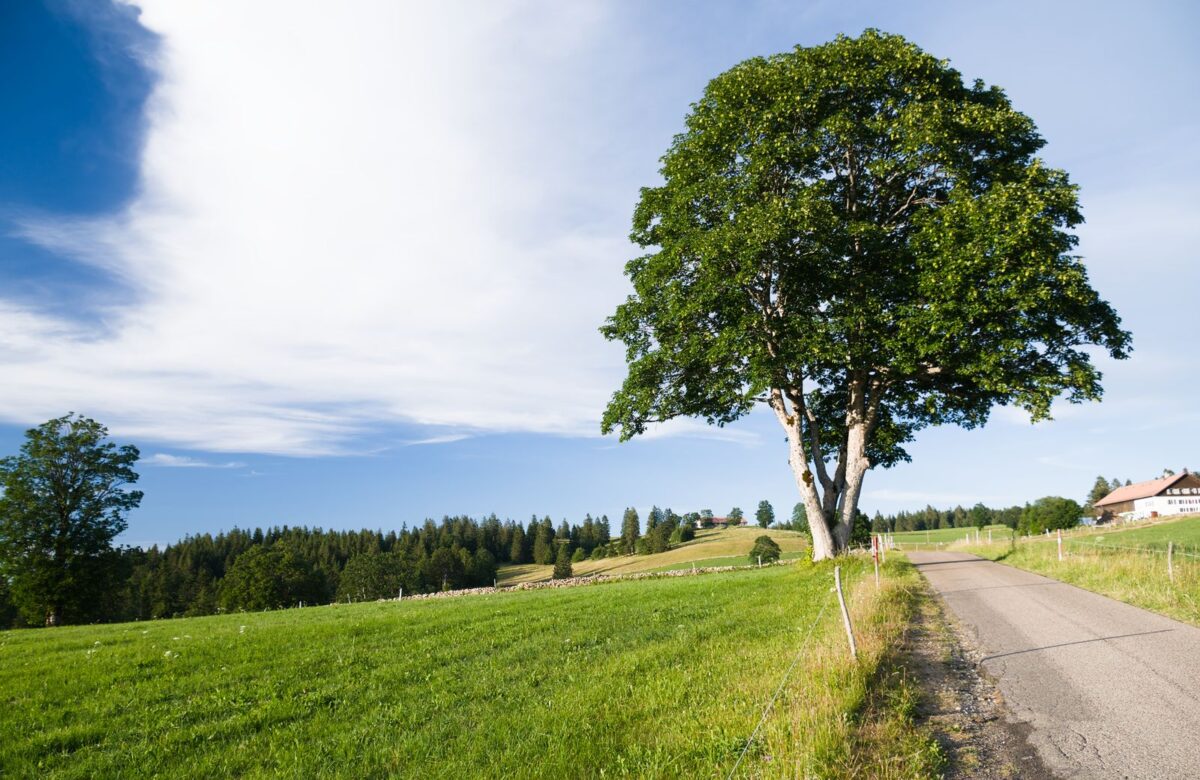
Monsoon, Waterfalls and Forts: The Pali-Sudhagad Case
The Pali Sudhagad lifestyle in one honest guide – the temple, the forts, the hot springs, the river and the monsoon – and what that landscape means if you are thinking about a plot on the Khopoli-Pali road.
- Pali, in Sudhagad taluka of Raigad, is the Ballaleshwar Ashtavinayak temple town – one of the eight revered Ganpati shrines.
- Two forts frame the belt: Sarasgad (Pali Fort) rising just east of town, and Sudhagad, a well-preserved trekking fort about 11 km east of Pali.
- The Unhere sulphur hot springs and the Amba river add to the weekend-draw list, and the monsoon turns the whole belt green with seasonal waterfalls.
- This is weekend-home country, not a resort strip – quiet, scenic and low-density, with services concentrated at the Khopoli end of the road.
- Pali/Sudhagad sits under the Raigad Regional Plan and UDCPR 2020, a different planning regime from the NAINA-governed Khopoli end.
What is the Pali Sudhagad lifestyle actually like?
The Pali Sudhagad lifestyle is quiet, scenic and seasonal – built around the Ballaleshwar Ashtavinayak temple, the Sarasgad and Sudhagad forts, the Unhere hot springs and the Amba river, with a dramatic monsoon and low-density surroundings rather than nightlife or malls.
Pali is a small temple town in Sudhagad taluka, Raigad, on the Khopoli-Pali road deeper in from the Expressway. Daily life here moves at a pilgrimage-town pace: the temple sets the rhythm, the forts and river set the backdrop, and the seasons do the rest. For a visitor, and for anyone considering a weekend plot, the appeal is exactly what it lacks – crowds, concrete and noise. What you get instead is hills on most horizons, a river in the valley, and air that changes completely between the dry months and the monsoon.
It is worth being honest about the trade-off. The Pali-Sudhagad belt is short on the schools, hospitals and shopping that a primary residence needs; those are concentrated nearer Khopoli and the Expressway. That makes this a second-home and weekend landscape, not a daily-commute one.
What are the main forts around Pali and Sudhagad?
Two stand out: Sarasgad, also called Pali Fort, which rises immediately east of Pali with four pinnacles, a Shiva temple and panoramic views; and Sudhagad, a large, well-preserved trekking fort about 11 km east of Pali, roughly 26 km south of Lonavala and 53 km west of Pune.
Sarasgad is the town’s own hill – steep, compact and close enough to climb on a morning. Its ridge carries a Shiva temple and opens wide views over Pali and the surrounding valley. Sudhagad is the bigger expedition: a broad, historic hill fort with old gateways, water cisterns and plateau walks, long popular with trekkers from Mumbai and Pune. Treat trek times and difficulty as things to confirm locally and seasonally – trails get slippery and leech-prone in the monsoon, and you should go with current, verified information rather than a fixed schedule.
| Landmark | Where it sits |
|---|---|
| Ballaleshwar temple | In Pali town – one of the eight Ashtavinayak shrines |
| Sarasgad fort (Pali Fort) | Immediately east of Pali; Shiva temple, four pinnacles, wide views |
| Sudhagad fort | ~11 km east of Pali; ~26 km south of Lonavala; ~53 km west of Pune |
| Unhere hot springs | Sulphur-rich thermal pools near Pali |
| Amba river | Runs through the valley by Pali, toward the Konkan plains |
Why is the monsoon the signature season here?
Because the Sahyadri rains transform the belt: the hills around Pali and Sudhagad turn deep green, seasonal waterfalls appear, the Amba river runs full, and the forts draw their biggest trekking crowds – which also makes trails slippery and roads busier.
The western ghats catch heavy rain from roughly June to September, and the Pali-Sudhagad landscape is built for it. Dry, brown slopes become green walls; small streams become falls; and the whole belt takes on the postcard look that pulls Mumbai and Pune visitors out for the weekend. It is the season most people fall for the area – and the season to see a plot at its most demanding, when you learn how water actually moves across the land.
That last point matters for anyone eyeing a plot. The monsoon is the honest test of drainage, approach-road condition and natural water courses. A parcel that looks perfect in March can behave very differently in July. If you are serious about land here, see it wet as well as dry.
What role does the Ballaleshwar temple play in Pali?
Ballaleshwar is one of the eight revered Ashtavinayak Ganpati temples and the only one known by a devotee’s name. It anchors Pali’s identity and economy, bringing a steady stream of pilgrims that supports the town’s roads, eateries and basic services year-round.
For a town its size, Pali punches above its weight because of the temple. The Ashtavinayak circuit is one of Maharashtra’s most important pilgrimages, and Ballaleshwar is a fixed stop on it. That steady footfall is why the town stays reasonably maintained and connected despite its rural setting, and it gives the belt a cultural weight that pure scenery would not. For a weekend-home buyer, it also means a dependable local economy and a reason the area will keep seeing visitors regardless of real-estate cycles.
Can you base a weekend home around the Pali Sudhagad lifestyle?
Yes – the Pali Sudhagad lifestyle suits a buildable weekend plot more than a daily-living one. You get forts, a river, a temple town and monsoon greenery within about two hours of Mumbai or Pune, but you should plan for limited local services and build on your own timeline.
This is the core of the area’s land case. A weekend-home buyer here is buying scenery, air and quiet, with the Expressway at Khopoli giving reasonable reach back to the city. The sensible approach is a titled, non-agricultural plot you develop in phases – boundary and approach first, utilities next, structure later – rather than expecting turnkey convenience. The reward is a base in one of the more characterful pockets of Raigad; the discipline is treating it as a project, not a purchase.
What should a land buyer check in the Pali-Sudhagad belt?
Confirm title and 7/12, NA status, tenure (Varg-1 versus Varg-2), the planning authority under the Raigad Regional Plan and UDCPR 2020, and any forest, hill-slope or river-buffer restriction – the last especially relevant given the forts, slopes and the Amba river.
- ✓Title and 7/12. Verify the current extract, mutation entries and a clean ownership chain for the exact survey or gat number.
- ✓NA status. Is the plot non-agricultural, or will you carry conversion and its one-time premium? Get it in writing.
- ✓Slope and water. Check hill-slope rules, natural water courses and river buffer – the belt is hilly and the Amba runs through it.
- ✓Forest and eco overlays. Fort and ghat surroundings can carry forest or eco-sensitive restrictions; verify before assuming you can build.
- ✓Planning authority. Confirm the Raigad Regional Plan / UDCPR 2020 route and the gram panchayat’s role for your village.
- ✓Access in the monsoon. Inspect the approach road in the rains, not just the dry season.
Frequently asked questions
Where is Pali in Sudhagad taluka?
Pali is a temple town in Sudhagad taluka, Raigad district, on the Khopoli-Pali road (State Highway 93), deeper in from the Mumbai-Pune Expressway at Khopoli. It is home to the Ballaleshwar Ashtavinayak temple and sits below Sarasgad fort, near Sudhagad fort, the Unhere hot springs and the Amba river.
What is the difference between Sarasgad and Sudhagad fort?
Sarasgad, also called Pali Fort, rises immediately east of Pali town with four pinnacles, a Shiva temple and panoramic views, and is a short, steep climb. Sudhagad is a much larger, well-preserved hill fort about 11 km east of Pali, roughly 26 km south of Lonavala and 53 km west of Pune, popular as a longer trek. Confirm trail conditions and timings locally, especially in the monsoon.
Is the monsoon the best time to visit Pali and Sudhagad?
The monsoon, roughly June to September, is when the belt is greenest, with seasonal waterfalls and a full Amba river, and it is the most popular trekking season. It is also when trails are slippery and roads busier, so go with current, verified trail information. If you are assessing a plot, seeing the land in the rains shows how water actually moves across it.
Why is the Ballaleshwar temple important?
Ballaleshwar in Pali is one of the eight revered Ashtavinayak Ganpati temples and the only one known by a devotee’s name. It anchors the town’s identity and supports a steady pilgrim economy year-round, which helps keep local roads and basic services reasonably maintained.
Is the Pali-Sudhagad belt suitable for a primary home?
It is better suited to a weekend or second home than a primary residence. Schools, hospitals and shopping are limited and concentrated nearer Khopoli and the Expressway. The belt offers scenery, quiet and a buildable plot within about two hours of Mumbai or Pune, but you should plan for limited local services.
Which planning authority governs land in Pali and Sudhagad?
Pali and Sudhagad fall under the Raigad Regional Plan, notified in 1991, and the state UDCPR 2020, with development permission routed through the Collector or Town Planning and the gram panchayat. This differs from the NAINA regime at the Khopoli and Khalapur end. Confirm the authority for your exact survey before you buy.
Lords of the Lands is developing a plotted project on the Khopoli-Pali road, and our team knows the Pali-Sudhagad belt survey by survey. If this landscape is where you want a weekend base, we can walk through the records, the planning authority and the real costs for a specific parcel with you.
Related reading
On the Khopoli-Pali road
- The complete Khopoli-Pali road land guide – the SH-93 corridor hub
- Khopoli vs Pali land – which end of the road suits you
- Khopoli-Pali land prices in 2026 – the asking bands by village
- A weekend home on the Khopoli-Pali road – building a second home here
- Khopoli to Pali drive times – how long each leg really takes
- Pali land in 2026 – buying in Sudhagad taluka
- Buying land in Pali and Sudhagad – a step-by-step guide
- The villages along the Khopoli-Pali road – a village-by-village look
- The Khopoli-Pali road in 2030 – what is coming next
- Mumbai to Khopoli-Pali – the route and drive time
Living & building here
- Farmhouse vs villa plot – which second home to build
- Gated vs open plots in Pali – which layout to choose
- Water and power for a Khopoli-Pali plot – getting utilities to the land
- The weekend plot buyer’s checklist – what to verify before you buy
- Building permission on a Khopoli-Pali plot – the approval route
Prices & corridors
- What a 25 lakh budget buys – entry-level plots on the road
- What 50 lakh to 1 crore buys – mid-budget plots on the road
- What a weekend villa plot costs on SH-93 – the all-in budget
- Khopoli land in 2026 – the Expressway-end town
- Khalapur land in 2026 – the taluka around Khopoli
- Karjat land prices in 2026 – the neighbouring market
- Karjat vs Khopoli – two corridors compared
- Khopoli-Pali vs Karjat and Lonavala – how the corridors compare
- Samruddhi Mahamarg land – the Nagpur-Mumbai corridor
Citations and sources
Ballaleshwar Ashtavinayak temple, Pali; Sarasgad fort (Pali Fort) and Sudhagad fort; Unhere hot springs; Amba river – Maharashtra tourism and district references. Sudhagad fort location (~11 km east of Pali, ~26 km south of Lonavala, ~53 km west of Pune) per regional references. Raigad Regional Plan (notified 1991) and UDCPR 2020 – Urban Development Department, Government of Maharashtra. Trek grades, timings and spring access vary by season – verify locally before setting out. Price and planning context as of October 2026, varying by plot. This is general information, not legal, tax or investment advice – verify every plot’s records independently before you transact. Official sources: UDCPR / Urban Development Dept · CIDCO / NAINA.
