
Khopoli-Pali Land Prices in 2026: What Sets Them
Khopoli-Pali land prices in 2026 run across a wide band, and the number on any single plot is set less by the corridor and more by six things you can actually check. Here is what moves them.
- Asking prices run roughly ₹2,000 to ₹9,000 per sq ft across the Khopoli-Pali corridor in 2026 – asking bands, not a quote, and always above the government ready-reckoner floor.
- NA status, road frontage, village, view and access decide where a plot sits in that band far more than the corridor name does.
- The ready-reckoner (ASR) is the stamp-duty floor – always distinct from, and lower than, the market asking price.
- One road, two planning regimes: the Khalapur end sits inside NAINA (MSRDC as Special Planning Authority); Pali and Sudhagad fall under the Raigad Regional Plan. The regime shapes both cost and certainty.
- Price any plot by its own survey – pull its ready-reckoner rate and recent registered deals in the same village, not the corridor average. No price rise is guaranteed.

What are Khopoli-Pali land prices in 2026?
Khopoli-Pali land prices in 2026 run roughly ₹2,000 to ₹9,000 per sq ft as asking rates, depending on the village, road frontage and whether the plot is already non-agricultural (NA). These are asking bands, not quotes, and they always sit above the government ready-reckoner (ASR) floor used for stamp duty.
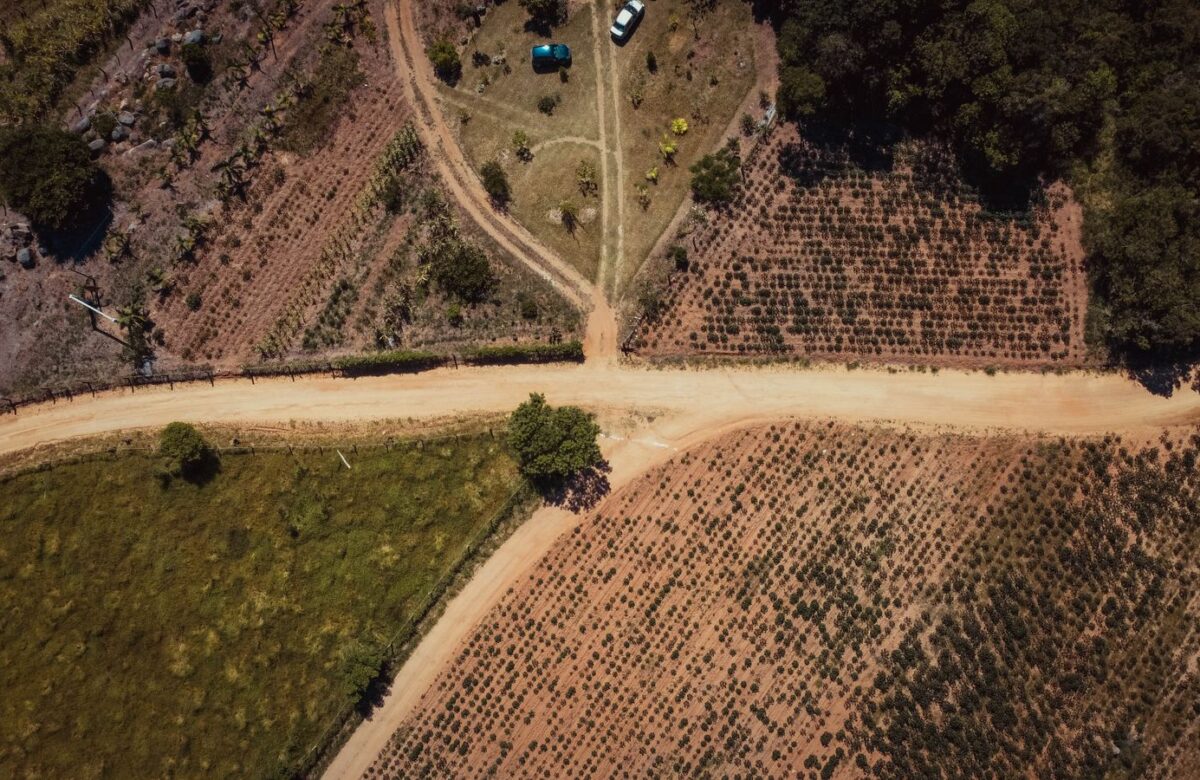
The corridor is State Highway 93 – the roughly 41 km Wakan-Pali-Khopoli road that links the Mumbai-Goa highway (NH-66) near Wakan to the Mumbai-Pune Expressway at Khopoli. Along its length the land market is not one price but a spread, because the product changes from one survey number to the next. A raw or part-converted parcel deep in an outer village asks far less than a fully NA, titled, gated weekend plot with a tar approach road near Pali or Khopoli.
So the honest answer to “what does land cost here” is a range, and the useful work is understanding why a specific plot lands where it does inside that range. That is what the rest of this guide is about.
Why do Khopoli-Pali land prices vary so widely?
The main drivers are NA status, road frontage, the specific village, the view, and distance from the Khopoli Expressway toll. A buildable NA plot with SH-93 frontage near Pali or Khopoli sits in the upper half of the band; an agricultural parcel in an outer village sits near the floor.
Think of the asking price as a base rate for the village plus a set of premiums and discounts. The base rate reflects where the village sits on the road and how developed the pocket already is. On top of that, the single biggest swing is NA status: a plot that is already non-agricultural and sanctioned for the intended use saves the buyer the conversion effort, the premium and the wait, so it commands more. Frontage on SH-93 itself, a tar approach road, and a river, fort or valley view on the Pali side all add. Distance from the Expressway toll works the other way – the deeper you go, the cheaper the land, and the longer the drive.
| What moves the price | Effect on the asking band |
|---|---|
| NA, titled, gated layout plot (ready to build) | Upper half of the band |
| Agricultural or part-converted parcel, outer village | Lower half of the band |
| SH-93 frontage or tar approach road | Premium |
| River, fort or valley view (Pali side) | Premium |
| Distance from the Khopoli Expressway toll | Discount as you go deeper |
How do asking prices differ from the ready-reckoner rate?
The ready-reckoner rate (the Annual Statement of Rates, or ASR) is the government’s minimum assessed value for a survey, used to calculate stamp duty and registration. The market asking price is what a seller wants, and on the Khopoli-Pali road it sits above the ASR. The two are always distinct.
This distinction matters because buyers often hear one number and assume it is the other. The ASR is set by the Department of Registration and Stamps (IGR Maharashtra), revised around 1 April each year, and it varies by village and survey. Stamp duty is charged on whichever is higher – the agreement value or the ASR – so the ASR is a floor, not a ceiling, and never the market rate.
The corridor asking band of ₹2,000 to ₹9,000 per sq ft is the market layer sitting on top of that floor. When you evaluate a plot, pull its ASR as the baseline for your stamp-duty cost, then judge the asking price separately against what similar plots in the same village have actually changed hands for.
Does the planning regime affect Khopoli-Pali land prices?
Yes. The Khopoli and Khalapur end sits inside NAINA, where MSRDC is the Special Planning Authority; Pali and Sudhagad fall under the Raigad Regional Plan and UDCPR 2020. The regime that governs a survey shapes both what you can build and how certain the approval path is, which feeds into price.
This is the cluster’s defining quirk: the same road crosses two planning regimes. On the Khalapur side, villages fall within the Navi Mumbai Airport Influence Notified Area (NAINA); CIDCO was the original planning authority and MSRDC was later appointed Special Planning Authority for a block of Panvel and Khalapur villages. Development there follows that regime’s control rules, not a simple gram panchayat signature.
On the Pali side, Sudhagad taluka is not in NAINA. Development runs under the Raigad Regional Plan (notified 1991) and the state’s Unified Development Control and Promotion Regulations (UDCPR 2020), with permissions through the Collector or Town Planning office and the gram panchayat. Buyers sometimes pay a premium for the perceived infrastructure certainty of the NAINA side, and sometimes prefer the lighter, lower-cost Pali side – but the key point is to confirm which authority governs your exact survey before you read anything into the price.
What should you actually pay for a plot on this road?
Price a plot by its own survey, not the corridor average. Pull the ready-reckoner rate for that specific survey, gather recent registered deal values in the same village, and compare the asking price against those – adjusting for NA status, frontage and approvals – rather than against the ₹2,000-9,000 corridor range.
The corridor band is useful for orientation and nothing more. Two plots a few hundred metres apart can sit at opposite ends of it because one is NA with frontage and the other is agricultural and landlocked. A fair price is the one supported by comparable registered transactions, discounted for every approval you still have to obtain and every cost you will carry.
- 1Start with the ASR. Look up the ready-reckoner rate for the exact survey or gat number as your stamp-duty baseline.
- 2Find real comparables. Ask for recent registered sale values in the same village, not asking rates from listings.
- 3Discount for what is missing. Subtract for pending NA conversion, no frontage, unclear title or no sanctioned layout.
- 4Add only for what is real. Pay a premium for NA, frontage, a view or ready infrastructure – not for a promised road or a story.
Will Khopoli-Pali land prices keep rising?
No one can promise that. The corridor has genuine drivers – two highways, Navi Mumbai airport within about an hour of Khopoli, and the Expressway Missing Link open since 1 May 2026 – but appreciation depends on actual infrastructure delivery and on the specific plot, and no return is guaranteed.
It is fair to say the fundamentals behind Khopoli-Pali land prices are real. Navi Mumbai International Airport began commercial passenger operations on 25 December 2025, and the Mumbai-Pune Expressway Missing Link opened on 1 May 2026, both improving access to the corridor. Access is what you are actually buying. But announced projects can slip, and a well-located corridor still contains badly chosen plots. Buy on the plot’s documents and your own use case – a weekend home you will enjoy, a parcel you can clear title on – and treat any price-rise talk as a possibility, never a commitment.
Common questions about Khopoli-Pali land prices
What is the price band for land on the Khopoli-Pali road in 2026?
Asking prices run roughly ₹2,000 to ₹9,000 per sq ft across the corridor in 2026, depending on village, frontage and NA status. These are asking bands, not quotes, and they sit above the government ready-reckoner floor used for stamp duty.
Why is one plot on the corridor so much dearer than another?
Because NA status, SH-93 frontage, the village, the view and distance from the Khopoli Expressway toll vary plot to plot. A buildable NA plot with frontage sits in the upper half of the band, while an agricultural parcel in an outer village sits near the floor.
Is the ready-reckoner rate the same as the market price?
No. The ready-reckoner (ASR) is the government’s minimum value for stamp duty, revised around 1 April each year. The market asking price sits above it, and stamp duty is charged on whichever is higher, the agreement value or the ASR.
Do Khopoli and Pali plots follow the same planning rules?
No. The Khopoli and Khalapur end sits inside NAINA with MSRDC as Special Planning Authority, while Pali and Sudhagad fall under the Raigad Regional Plan and UDCPR 2020. Confirm which authority governs your exact survey before you buy.
How do I check whether an asking price is fair?
Pull the ready-reckoner rate for the exact survey, gather recent registered sale values in the same village, and compare the asking price against those. Discount for pending NA conversion, no frontage or unclear title, and do not pay for a promised road.
Is land on the Khopoli-Pali road guaranteed to appreciate?
No. The corridor has real drivers like two highways, Navi Mumbai airport within about an hour, and the Expressway Missing Link open since 1 May 2026, but appreciation depends on infrastructure delivery and the specific plot. No return is guaranteed.
Lords of the Lands is developing a plotted project on the Khopoli-Pali road, and our team knows this corridor survey by survey. If you are weighing a plot here, we can walk through the ready-reckoner, the planning authority and the real asking-versus-fair gap for that specific parcel with you.
Related reading
- The complete Khopoli-Pali road land guide
- What ₹25 lakh buys on the Khopoli-Pali road
- ₹50 lakh to ₹1 crore plots on the Khopoli-Pali road
- Ready reckoner rates for Khopoli-Pali 2026
- Khopoli vs Pali: where to buy land
- Stamp duty on a Raigad plot in 2026
- The NA conversion premium explained
On the corridor
- Buying land in Pali in 2026 — the temple-town end of the corridor.
- The villages along the Khopoli-Pali road — where to look, and why.
- Buying land in Pali and Sudhagad — title and tenure in this taluka.
- A weekend home on the Khopoli-Pali road — second-home country within two hours.
- Khopoli to Pali drive times — how far the plots really are.
- Khopoli-Pali to the Navi Mumbai airport — the drive to NMIA.
- Land near Ballaleshwar and Sarasgad — plots around the temple and fort.
Budgets and costs
- Land under 25 lakh near Mumbai — the entry-level budget.
- 20 to 50 lakh plots in Karjat-Khopoli — the mid-budget band.
- 1 crore land near Mumbai — what a crore buys today.
- The full cost of buying a plot — charges beyond the headline price.
- Guntha, acre and sq ft conversion — the land-area units explained.
Checks and nearby markets
- How to check a plot’s NA status — confirming it can legally be built on.
- NA conversion on the Khopoli-Pali road — turning farmland into a buildable plot.
- Khopoli land in 2026: the complete guide — the Expressway-end market.
- Karjat land prices in 2026 — the neighbouring corridor.
Citations and sources
State Highway 93 (Wakan-Pali-Khopoli Road) – Maharashtra PWD / pre-feasibility report, environmentclearance.nic.in. NAINA and Special Planning Authority status for Panvel-Khalapur villages – CIDCO / MSRDC notifications. Raigad Regional Plan (notified 1991) and UDCPR 2020 – Urban Development Department, Government of Maharashtra. Ready-reckoner (ASR) methodology and annual revision – Department of Registration and Stamps (IGR), Maharashtra. MLRC (Second Amendment) Act, 2025 and implementing GR dated 10 February 2026 – Revenue and Forest Department, Maharashtra. NMIA commercial operations from 25 December 2025; Mumbai-Pune Expressway Missing Link opened 1 May 2026. Price bands are market asking ranges as of October 2026 and vary by plot – verify the ready-reckoner and recent registrations per survey. This is general information, not legal, tax or investment advice – verify every plot’s records independently before you transact. Official sources: IGR Maharashtra · UDCPR / Urban Development Dept · CIDCO / NAINA · Maharashtra Govt (Revenue & Forest / MLRC).
