

How Do You Compare Land Corridors Before Buying?
- Four questions separate corridors: demand source, operational vs announced connectivity, entry point, and holding period
- Khopoli is the only corridor with operational connectivity today — via the Mumbai–Pune Expressway
- Karjat has a weekend and hospitality market now; the Panvel–Karjat suburban rail would convert it into a commuter corridor when it runs
- Shrivardhan is the coastal, longest-horizon position — dependent on the Revas–Reddi Coastal Highway (MSH4) upgrade
- A good corridor does not rescue a bad parcel — tenure, zone, title and access still decide the deal
The way to compare land corridors is to run one framework across each, not to crown a winner. Buyers usually ask which corridor is best; it is the wrong question, and it produces the wrong answer, because these three places are not competing for the same buyer.
Karjat, Khopoli and Shrivardhan sit at different distances from Mumbai, are served by different infrastructure, and draw demand from different sources — so they serve here less as a ranking than as worked examples of the framework. A useful comparison starts by naming the thesis behind each, then testing it. For the four-corridor comparison applying this framework, see our full corridor comparison.
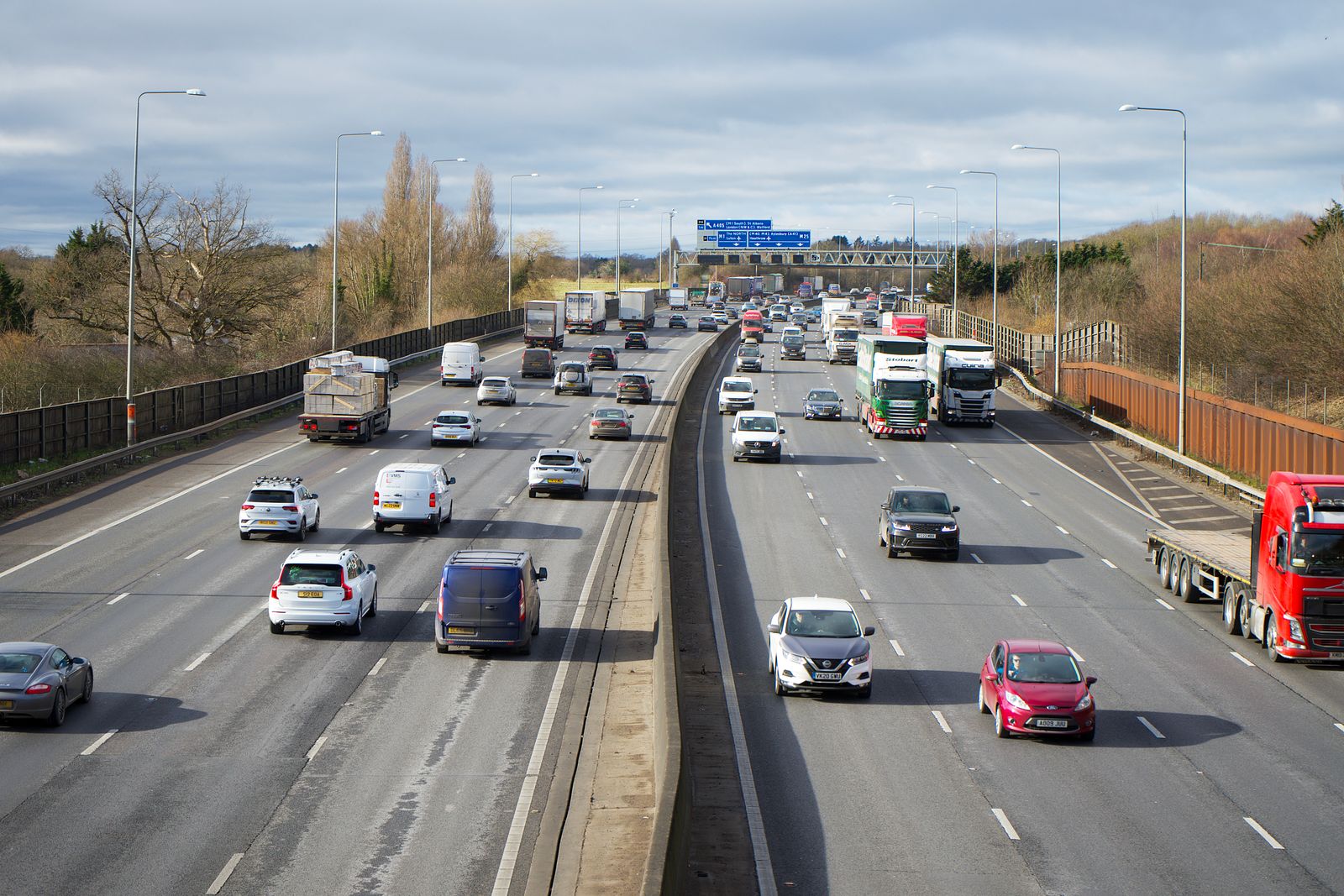
Which four questions actually separate one land corridor from another?
Four questions do most of the work: what is the demand source, what connectivity is operational today versus merely announced, what the entry point implies about who else is buying, and what holding period the thesis requires.
Before looking at any specific location, it helps to know what you are comparing. Four questions do most of the work.
The four questions that drive the comparison
What is the demand source? Who buys here, and why? Weekend-home buyers, permanent residents, industrial employers and speculative investors produce very different price behaviour. A corridor driven by weekend demand behaves differently in a downturn from one driven by employment.
What connectivity is operational today, and what is announced? These are two separate lists and should be kept separate. Operational infrastructure is priced in. Announced infrastructure is a bet on execution and timing.
What is the entry point, and what does that imply about who else is buying? A lower entry price usually reflects longer distance, thinner infrastructure or greater uncertainty — not a bargain that others have missed.
What holding period does the thesis require? If the case depends on infrastructure that is under construction, your horizon is at least the construction timeline plus the absorption period that follows it.
What is the investment thesis for Karjat, the rail corridor?
Karjat’s defining variable is rail: an existing weekend and hospitality market that may convert into a commuter market if the Panvel–Karjat suburban line, reported past 80% completion and targeted for 2026, begins running.
The Panvel–Karjat suburban rail variable
Karjat’s defining variable is rail. The Panvel–Karjat suburban corridor has been under construction and, on public reporting, crossed 80% completion with commissioning targeted during 2026. Verify its current operating status before you rely on it — this is precisely the kind of announced-versus-operational distinction that matters.
If and when it runs, it changes Karjat’s character. Suburban rail connects a place to a daily commuting market rather than a weekend one, and daily commuting markets support permanent residence, which supports schools, healthcare and retail, which supports further demand.
Karjat also has an established weekend and hospitality base, with branded resorts operating in the area — a demand source that exists today rather than one that is pending.
The thesis: an existing weekend market that may convert into a commuter market when rail arrives.
What is the investment thesis for Khopoli, on the expressway and new-town edge?
Khopoli’s thesis is operational road connectivity on the Mumbai–Pune Expressway plus potential spillover from the large planned development nearby — with the caveat that land near a new town is not land in it.
Khopoli sits on the Mumbai–Pune Expressway, which means its road connectivity is operational, not pending. That is a meaningfully different risk position from a corridor waiting on a project.
Its second variable is proximity. Khopoli sits within reach of the Raigad growth belt where Third Mumbai — KSC New Town — is being planned, and within the broader catchment of Navi Mumbai International Airport, which began international operations in July 2026, and Atal Setu, operational since 2024.
Proximity is not the same as inclusion. Land near a new town is not land in a new town, and the distinction changes both the upside and the regulatory position.
The thesis: operational road connectivity plus spillover from a large planned development nearby.
What is the investment thesis for Shrivardhan, the coastal corridor?
Shrivardhan is the longest-horizon and most infrastructure-dependent of the three: a coastal, second-home position ahead of the Revas–Reddi Coastal Highway (MSH4) upgrade, at a lower entry point and over a longer horizon.
Shrivardhan is the longest-horizon of the three and the most infrastructure-dependent. It sits on the Konkan coast, and its connectivity case rests substantially on the Revas–Reddi Coastal Highway (MSH4), an MSRDC project to renew and widen the coastal road running from Revas down to Reddi.
The project is real and moving — bids have been invited for major creek bridges including Revdanda–Salav over the Kundalika, Kolmandia–Veshvi over the Bankot, and Dapoli–Guhagar over the Dabhol. It has also faced clearance-related delays, which senior state figures have publicly pressed on.
Demand here is coastal and second-home led, with port activity in the wider region as an additional variable.
The thesis: a coastal position ahead of a highway upgrade, at a lower entry point, over a longer horizon.
How do Karjat, Khopoli and Shrivardhan compare side by side?
Their primary connectivity variables differ in both type and status: Karjat on suburban rail (under construction, targeted 2026), Khopoli on the operational Mumbai–Pune Expressway, and Shrivardhan on the Revas–Reddi Coastal Highway (under way, with clearance delays).
| Karjat | Khopoli | Shrivardhan | |
|---|---|---|---|
| Primary connectivity variable | Panvel–Karjat suburban rail | Mumbai–Pune Expressway | Revas–Reddi Coastal Highway |
| Status of that variable | Under construction, targeted 2026 | Operational | Under way, with clearance delays |
| Demand source | Weekend and hospitality, potentially commuter | Road-accessible weekend and industrial | Coastal second homes |
| Horizon implied | Medium | Short to medium | Long |
How do you use this framework to compare land corridors?
Match the corridor to your own constraint rather than to the strongest story: operational connectivity matters most if you need to use the land within a couple of years, while an earlier-stage corridor at a lower entry point suits a genuine long hold.
Match the corridor to your own constraint rather than to the strongest story.
If you need the option to use the land yourself within a couple of years, operational connectivity matters more than announced connectivity, and a shorter drive beats a lower price.
If you are buying for a long hold and can genuinely leave the capital untouched, an earlier-stage corridor at a lower entry point is a coherent position — provided you have checked that the infrastructure it depends on is actually funded and under construction, not merely announced.
Plot-level work still decides
And in every case the corridor-level thesis is the easy part. The plot-level work — tenure, zone, title, access — decides whether you own something useful. A good corridor does not rescue a bad parcel.
FAQ
Which is better — Karjat, Khopoli or Shrivardhan?
None of them as a category. They serve different buyers on different horizons: Karjat on rail, Khopoli on operational road access, Shrivardhan on a coastal highway upgrade over a longer horizon. Match the corridor to your own constraint rather than to the strongest story.
Which of the three has operational connectivity today?
Khopoli, which sits on the Mumbai–Pune Expressway. Karjat’s suburban rail link and Shrivardhan’s coastal highway upgrade are both still pending.
Is land near Third Mumbai the same as land in Third Mumbai?
No. Proximity is not inclusion. Land near a new town is not land in a new town, and the distinction changes both the upside and the regulatory position.
What holding period should I assume?
At least the construction timeline of the infrastructure the thesis depends on, plus the absorption period that follows it. Khopoli implies short to medium, Karjat medium, Shrivardhan long.
Does a good corridor make up for a weak parcel?
No. Tenure, zone, title and access decide whether you own something useful. A good corridor does not rescue a bad parcel.
Related reading
Strategy & how to choose
- How to shortlist a plot – a practical filter before you compare corridors.
- Risks of buying in emerging corridors – what can go wrong on an announced-infrastructure bet.
- Questions to ask about land-return claims – stress-testing the appreciation story.
- Plotted land vs an apartment – two very different investments.
- Plotted land vs a flat in the MMR – how the two compare in the Mumbai region.
- Land vs plotted development – raw land versus a sanctioned layout.
- Land vs gold, stocks, FDs and flats – where land sits among asset classes.
- Land banking near Mumbai – the long-hold playbook.
- Areas appreciating near Mumbai – where demand is building.
- Selling a plot later – the liquidity question most buyers skip.
- A fifty-lakh land budget in 2026 – what that buys across corridors.
Corridors & location
- Khopoli-Pali road land in 2026 – the SH-93 corridor guide.
- Karjat vs Khopoli – two corridors head to head.
- Alibaug vs Karjat and Khopoli – what the Alibaug premium buys.
- MMR growth corridors – the wider regional map.
- The Panvel–Karjat rail corridor – the variable that could reprice Karjat.
- NAINA vs KSC New Town vs Mumbai 3.0 – the Third Mumbai acronyms sorted out.
- How to judge a project for yourself – the plot-level checklist.
The parcel itself
- NA plot vs agricultural land – why the tenure line matters.
- What a villa plot actually is – defining the product.
- What Lords of the Lands builds – who we are and how we work.
Citations and sources
Sources: MahaRERA / IGR Maharashtra / MSRDC. Infrastructure timelines as of September 2026. General information, not investment advice. Verify the current status of any infrastructure project with the implementing authority and the position of any specific parcel with the relevant revenue and planning authorities before making a decision. Official sources: MSRDC · CIDCO / NAINA · IGR Maharashtra.
