
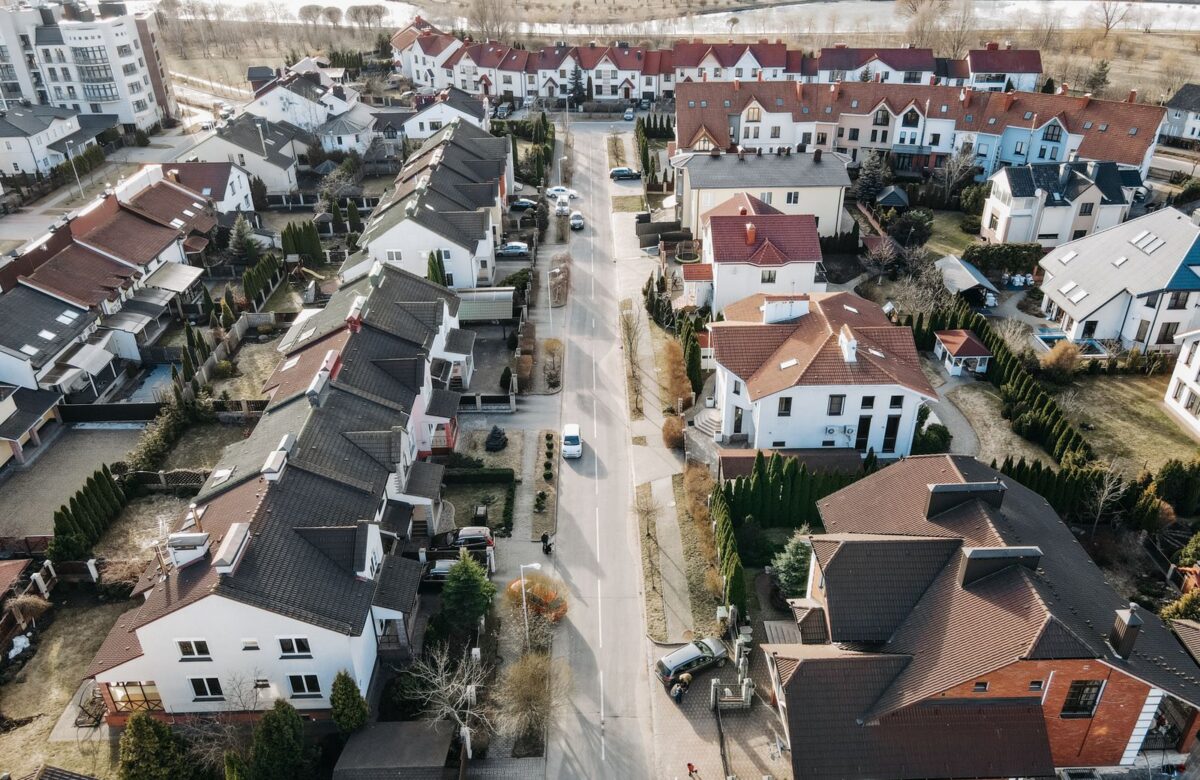
What Are You Really Buying With a Villa Plot?
- Villa plots in Mumbai 3.0 are plots, not villas. You buy a demarcated plot in a sanctioned layout and build the house yourself.
- What the developer owes you is the layout, the shared infrastructure and clear title. What you owe is the design, the approvals for your house and the build.
- That split is the whole decision. Knowing exactly where it falls is more useful than any render.
- Plot size is stated as an area, but usable area depends on setbacks, slope and how much of it you can actually build on.
- Six checks apply before booking, and five of them are documentary and free.
- The upside of building yourself is control. The cost is time, and it is a real cost that buyers routinely discount.
The phrase villa plot does a lot of work, and most of it is in the wrong direction.
It suggests something close to a villa. It means a plot, in a layout, on which a villa may be built by you, later, at your cost. Everything useful about the decision follows from taking that literally.
Terms used on this page
Villa plot is a demarcated plot inside a sanctioned layout, sold for a house to be built on it.
Layout is the sanctioned plan that divides a parcel into plots and roads.
Setback is the distance a building must be kept back from a plot boundary.
Satbara is the 7/12 extract: the village record of rights for one parcel.
Khatedar is the person recorded as holding the land.
Mutation is the entry that records a change of holder in the record of rights.
NA is non-agricultural: the order that converts land use from farming so it can be built on.

What are you actually buying with villa plots?
A demarcated plot whose title sits in the record of rights that section 148 of the Maharashtra Land Revenue Code, 1966 requires in every village, inside a layout with shared roads and services.
You own the plot. You do not own a house, and none is included.
The developer’s side of the bargain is the land assembled and verified, the layout sanctioned, the internal roads and common services built, and the plot conveyed to you with clean title. That is a substantial amount of work, and it is what separates a plot in a layout from raw agricultural land.
Your side is the house: design, approvals for that house, a contractor, and the build. A plotted development removes the land risk. It does not remove the construction project.
| Item | Typically the developer | Typically you |
|---|---|---|
| Clean title to the plot | Yes | — |
| Sanctioned layout | Yes | — |
| Internal roads and common services | Yes, as specified in the agreement | — |
| Plot demarcation on the ground | Yes | — |
| House design and drawings | — | Yes |
| Approvals for your house | — | Yes |
| Construction and its cost | — | Yes |
| Boundary wall on your plot | Check the agreement | Often you |
Why does usable area differ from plot area?
Because setbacks, slope and drainage reduce what you can build on, and no figure in a register under section 150 of the Maharashtra Land Revenue Code, 1966 adjusts for any of it.
A plot is sold as an area. A house is built inside a smaller envelope than that area.
Setbacks are the obvious one: a building must sit back from the boundaries, which shrinks the footprint on every side. Slope is the underestimated one, because levelling and retaining cost money and can remove usable ground entirely on a steep parcel.
The practical step is to ask, before booking, what the buildable envelope on this specific plot looks like. A developer who has thought about the layout will be able to tell you. If nobody can, that is itself informative.
What should you check before booking?
Six things, five of them documentary and free to obtain under the Maharashtra Land Revenue Code, 1966 and the layout sanction.
These are the same checks that apply to any plot anywhere, with one addition that is specific to buying inside somebody else’s development.
- The sanctioned layout, not the brochure plan. Sanction is what makes road widths, open space and amenity space enforceable rather than illustrative.
- The record of rights for the survey numbers in the layout. Land use, tenure and holder, read directly rather than summarised for you.
- The conversion order, and that the record reflects it. An order that exists but is not reflected on the record is an unfinished job.
- The register, for any entry made but not certified. An uncertified entry is an argument in progress.
- The agreement against the render. List what matters to you from the pictures, then find each item in the contract with a specification and a date.
- Water, at the end of the dry season. The source, whether it is shared, and what it does in April rather than August.
A villa plot is the land risk removed and the building project handed to you. That is a good trade for people who want control and a poor one for people who wanted a house.
Girish Chhalwani, Co-Founder, Lords of the Lands
Is building yourself worth it?
It depends entirely on how you value control against time, and nothing in the Maharashtra Land Revenue Code, 1966 or the layout sanction will weigh that for you.
Building gives you a house that fits how you actually live, phased on your own schedule and budget.
The cost is time and attention, and it is larger than most buyers allow for. Design, approvals, a contractor, site supervision and the inevitable delays are a project, not a purchase. People who enjoy that get a better house for the money. People who do not should be honest with themselves before booking.
There is a middle path worth knowing about: hold the plot, build later. The land does its work while you decide, which is one of the genuine advantages of buying a plot rather than a finished unit.
Frequently asked questions
Does a villa plot include a villa?
No. You buy a demarcated plot in a sanctioned layout with shared infrastructure. The house is designed, approved and built by you, at your cost and on your timeline.
Can I build whatever I want on it?
Within the layout’s rules and the applicable building regulations. Setbacks, height and coverage all apply, and a layout may add its own design controls. Ask for those in writing before booking.
How much of the plot can I actually build on?
Less than the stated area, once setbacks are applied, and less again on a sloped plot. Ask for the buildable envelope on your specific plot rather than assuming a percentage.
Do I have to build within a set time?
Some layouts impose a construction timeline and some do not. It is a contractual term rather than a legal default, so read it before you sign rather than after.
Who provides water and power?
Whatever the agreement says, which is why the agreement matters more than the render. Common infrastructure is typically the developer’s obligation; connections to your house are typically yours.
Is a plot better than a finished second home?
Neither is better. A plot gives control and a slower path. A finished home gives immediacy and less say. The right answer depends on whether you want a project or a place to arrive at.
Looking at villa plots in the belt? Ask us for the sanctioned layout and the buildable envelope on the specific plot you are considering, before you book anything.
Related reading
The buying checks
- How to verify title before buying a plot – the six-document sequence.
- The title-check checklist – the documents to demand.
- How to check a plot’s NA status – confirming conversion on the record.
- NA plot vs agricultural land – the land-use line.
- Class 1 vs Class 2 tenure – which land transfers freely.
- Right of way and plot access – the recorded-access test.
- Getting building permission for a plot – the approval to build your house.
- Getting water and power to a plot – the utilities question.
Judging the plot and the project
- The nine criteria we shortlist a plot against – the filter.
- The seven tests for judging a layout – sanction, survey numbers and more.
- Plotted land vs an apartment – two different investments.
- Land vs plotted development – raw land versus a sanctioned layout.
- The real risks in an emerging corridor – and the checks that retire them.
- How to read a land-return claim – stress-testing the pitch.
Where these plots are
- Karjat land prices in 2026 – the rail belt.
- Khopoli land in 2026 – the expressway side.
- Khopoli-Pali road land: the SH-93 guide – where AURA ESTATE sits.
- Upper Alibaug land in 2026 – the coastal belt.
- Panvel plots in 2026 – the airport-side market.
- Neral land in 2026 – Karjat’s near neighbour.
- How to read any MMR corridor – the regional map.
From Lords of the Lands
- What Lords of the Lands builds, and where
- The types of plotted development we build
- What Mumbai 3.0 actually refers to
- Decoding land: how a parcel is assessed
- Talk to Lords of the Lands
Citations and sources
- Maharashtra Land Revenue Code, 1966 — sections 148 and 150, the record of rights maintained in every village and the register of mutations.
