
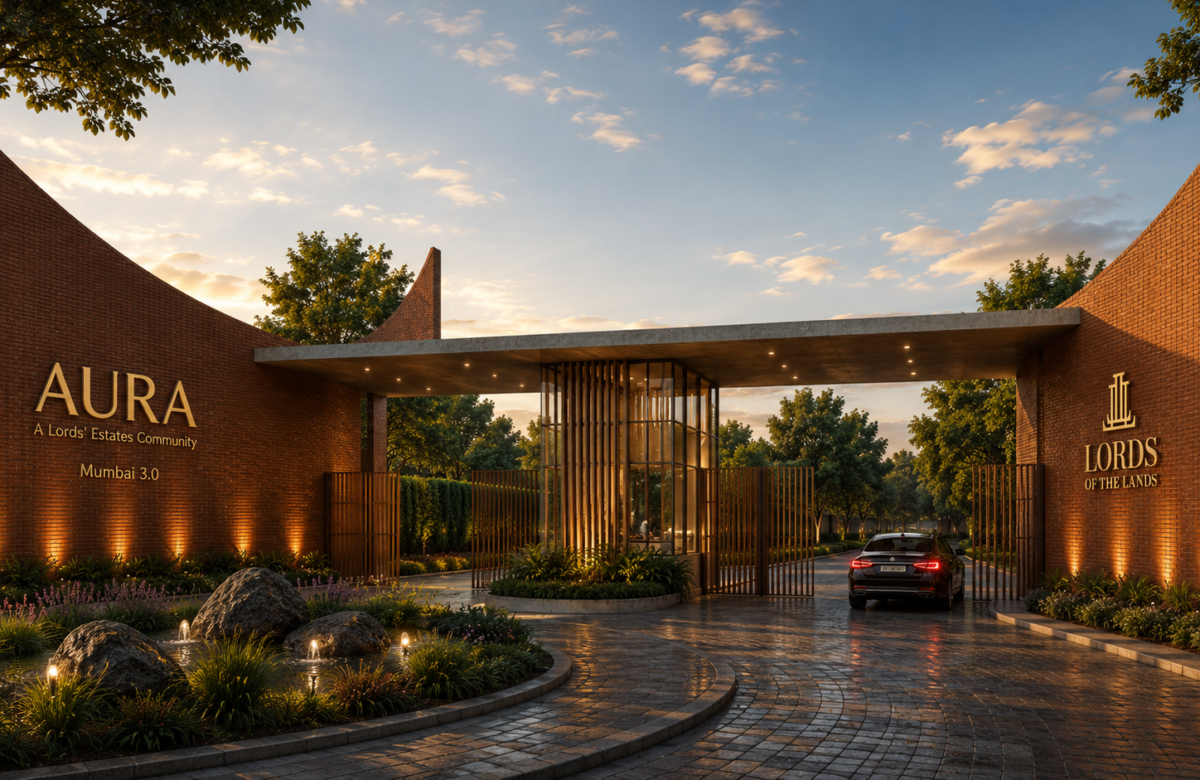
What Is Lords of the Lands? Plots We Build
- Lords of the Lands is a plotted land developer working the belt east and south of Mumbai that state planning language now calls Mumbai 3.0.
- Three projects are open as at 23 September 2026: AURUM at Karjat, AURA ESTATE on the Khopoli-Pali road, and AUREA in Upper Alibaug near Dighi Port.
- Plotted development means we buy the land, sanction a layout, build the shared infrastructure and sell demarcated plots. You build the house.
- AURA ESTATE is designed by Arc Sanjay Puri and covers 3.26 million square feet. AUREA runs to 4.5 million. AURUM is the most compact at 0.5 million.
- Entry pricing as at 23 September 2026 starts at ₹49 lacs at AURUM, ₹69 lacs at AURA ESTATE and ₹99 lacs at AUREA.
- Every parcel is checked against the revenue record before it is bought, not after. That sequence is the actual product.
Lords of the Lands buys land in the corridor around Mumbai, verifies it, and develops it into plotted destinations.
That sentence hides the part that matters. Anyone can buy land and draw a layout on it. The work that decides whether a plot is worth owning in ten years happens before the purchase, in the revenue record, and it is invisible in a brochure.
Terms used on this page
Plotted development is a sanctioned layout that divides a parcel into individual plots with shared roads and services.
Satbara is the 7/12 extract: the village record of rights for one parcel.
Khatedar is the person recorded as holding the land.
Mutation is the entry that records a change of holder in the record of rights.
Gat number is the group survey number given to a holding after consolidation.
NA is non-agricultural: the order that converts land use from farming so it can be built on.
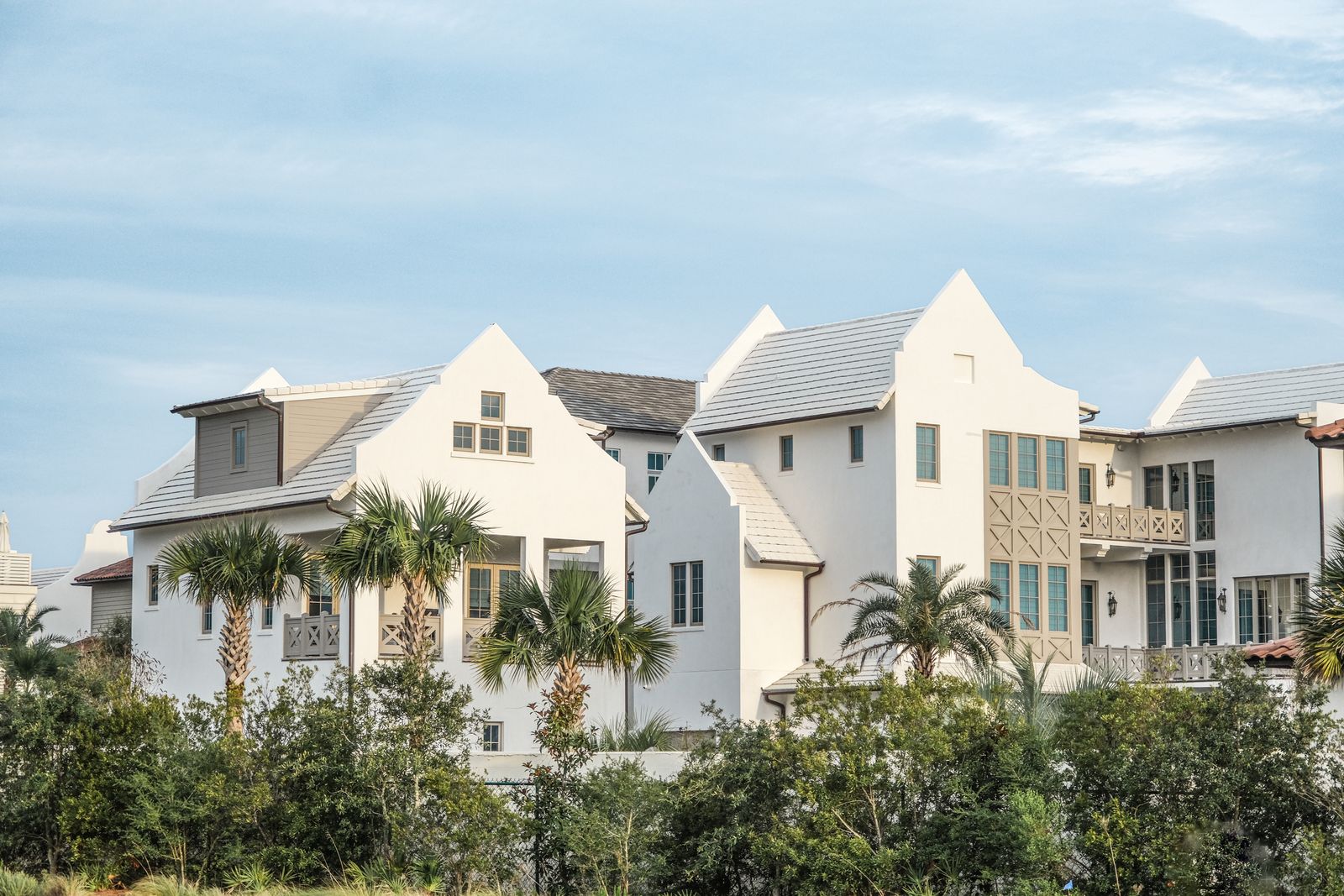
What does Lords of the Lands actually do?
We acquire parcels, take them through the record of rights that section 148 of the Maharashtra Land Revenue Code, 1966 requires in every village, sanction a layout and build the shared infrastructure.
What a buyer receives is a demarcated plot inside that layout, with roads and services already committed.
The distinction from buying raw land yourself is worth stating plainly. Raw land is cheaper per square foot and carries the entire verification burden, the conversion process and the infrastructure cost. A plot in a sanctioned layout costs more because that work is already done and the risk has been absorbed by somebody whose name is on it.
The distinction from buying a built unit is the opposite. You are not buying a house. You are buying the right to build one, on a plot whose boundaries, access and services are settled.
Where do we build?
As at 23 September 2026 three projects were open, all inside the Mumbai 3.0 belt but on three different growth stories.
One sits on the rail and expressway spine, one on a road corridor inland, and one on the coast. That spread is deliberate rather than accidental.
| Project | Location | Footprint | Entry price | Character |
|---|---|---|---|---|
| AURUM | Karjat, Mumbai 3.0 | 0.5 million sq ft | From ₹49 lacs | The most compact of the three |
| AURA ESTATE | Khopoli-Pali Road, Mumbai 3.0 | 3.26 million sq ft | From ₹69 lacs | Designed by Arc Sanjay Puri |
| AUREA | Upper Alibaug, near Dighi Port | 4.5 million sq ft | From ₹99 lacs | The biggest of the three, and coastal |
Those prices are entry points on 23 September 2026 and they move. Treat any figure older than a quarter as indicative and ask for the current one.
Why three corridors rather than one?
Because the three are driven by different infrastructure, and section 150 of the Maharashtra Land Revenue Code, 1966 will not tell you which one suits your horizon.
Karjat is the established commuter and weekend belt. The Khopoli side is the expressway corridor. Upper Alibaug is coastal, and its story is port-led rather than road-led.
A buyer with a five-year view and a commuting habit is not the same buyer as one taking a coastal position for the next decade. Offering one corridor and calling it the right answer for everybody would be easier to market and less honest.
The practical consequence is that our first question to a buyer is the horizon, not the budget. The budget narrows the plot. The horizon decides the corridor.
The land business rewards the work nobody photographs. By the time a layout looks beautiful, every decision that determines whether it was a good buy has already been made.
Girish Chhalwani, Co-Founder, Lords of the Lands
What happens before a parcel becomes a project?
A fixed sequence, and it is the same one we tell buyers to run under section 150 of the Maharashtra Land Revenue Code, 1966 before they book anything.
We apply it to ourselves first, because a defect found after acquisition is a defect we own rather than one we can walk away from.
- Read the record of rights for every survey number in the footprint. Land use before owner. A parcel recorded as agricultural is agricultural, whatever is happening next door.
- Pull the holder’s account register for each seller. This is where undisclosed adjacent holdings and unexpected co-holders appear.
- Read the mutation register, not just the current entry. An entry made but not certified is an argument in progress, and buying into one is how disputes are inherited.
- Check tenure and any restriction requiring prior sanction. Some classes of land cannot be transferred without permission, and no price compensates for that.
- Establish legal access. A parcel without a lawful approach road is not developable, however good the photographs are.
- Only then negotiate. Price is the last question, not the first, because the answers above change what the land is worth.
Who is this for?
Buyers with a horizon measured in years rather than months, in a corridor whose infrastructure is still arriving through 2026 and beyond.
Plotted land is not a liquid asset, we do not present it as one, and the horizon question decides far more than the budget does.
It suits somebody building a second home on their own timeline, or holding land in a corridor they have a view on. It suits somebody who wants the verification done and documented rather than doing it themselves.
It does not suit somebody who needs to exit quickly. Plotted land resale depends on the corridor maturing, and that is not on your schedule. That is a narrower pitch than most land marketing makes, and it is the honest one.
Frequently asked questions
What is Lords of the Lands?
A plotted land developer working the Karjat, Khopoli and Upper Alibaug belt around Mumbai. We acquire parcels, verify them against the revenue record, sanction layouts and sell demarcated plots with shared infrastructure built.
Which projects are open?
Three as at 23 September 2026: AURUM at Karjat, AURA ESTATE on the Khopoli-Pali road, and AUREA in Upper Alibaug near Dighi Port. Footprints run from 0.5 to 4.5 million square feet.
What do they start at?
As at 23 September 2026, entry pricing starts at ₹49 lacs at AURUM, ₹69 lacs at AURA ESTATE and ₹99 lacs at AUREA. Prices move, so confirm the current figure rather than relying on a published one.
Do you sell built villas?
No. We sell plots in a sanctioned layout with common infrastructure. The house is yours to build, on your own timeline and to your own design.
Who designed AURA ESTATE?
Arc Sanjay Puri. It is the bigger of our two inland projects at 3.26 million square feet, on the Khopoli-Pali road.
How do I check a plot you are selling me?
Ask for the survey numbers and run the records yourself. If any seller is reluctant to hand over the numbers so you can pull the record of rights independently, that reluctance is itself the finding.
Want to see how a parcel is actually assessed? We will walk you through the record of rights on a plot you are considering, ours or anybody else’s.
Related reading
Where we build
- Karjat land prices in 2026 – the AURUM belt.
- Khopoli land in 2026 – the expressway side.
- Khopoli-Pali road land: the SH-93 guide – where AURA ESTATE sits.
- Upper Alibaug land in 2026 – the AUREA belt near Dighi Port.
- Panvel plots in 2026 – the airport-side market.
- Khalapur land in 2026 – the NAINA-edge taluka.
- Neral land in 2026 – Karjat’s near neighbour.
- Karjat and Khopoli compared – the two inland belts.
- Alibaug against the inland belt – coast versus corridor.
How we verify a parcel
- How to verify title before buying a plot – the six-document sequence.
- The title-check checklist – the documents to pull.
- How to read a 7/12 extract – the record of rights.
- Mutation entries and ferfar – the uncertified-entry check.
- Class 1 vs Class 2 tenure – the transfer restriction.
- NA plot vs agricultural land – the land-use line.
- What a RERA-approved plot proves – and what it does not.
- Right of way and plot access – the recorded-access test.
Judging a plot or a project
- How to judge a project in Karjat or Khopoli – the seven tests.
- How to shortlist a plot – the nine criteria.
- Villa plots in Mumbai 3.0 – what you are actually buying.
- Plotted land vs an apartment – two different investments.
- The real risks in an emerging corridor – and the checks that retire them.
- How to compare land corridors – matching corridor to horizon.
From Lords of the Lands
- Decoding land: how a parcel is assessed
- The types of plotted development we build
- What Mumbai 3.0 actually refers to
- Talk to Lords of the Lands
Citations and sources
- Maharashtra Land Revenue Code, 1966 — sections 148 and 150, the record of rights maintained in every village and the register of mutations.
